
Gastropoda
Gastropoda is a class of molluscs that includes snails and slugs. They are a diverse group found in marine, freshwater, and terrestrial environments.
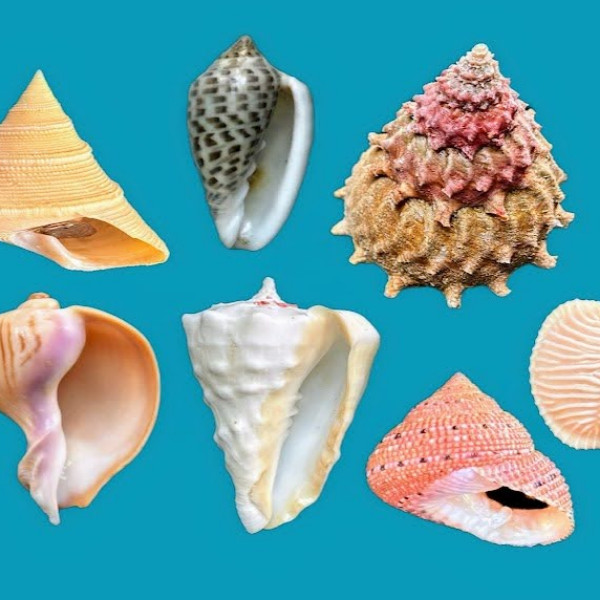
Gastropoda is the largest class of molluscs, with over 65,000 species. Most gastropods have a coiled or conical shell, though some, like slugs, have a reduced or absent shell. Shells range in size from from less than 1mm to 600mm.
About Gastropoda
A defining characteristic of gastropods is a process called torsion, where the visceral mass rotates 180 degrees during development, positioning the anus above the head. Most shells are right coiled (dextral), and the shells have the opening (aperture) on the right. Some species have left coiling (sinistral), with the aperture on the left. Some dextral species have individuals that are sinistral and these shells are highly prized by collectors.
Most of the popular shells with collectors belong to the class Gastropoda. Popular families include Cypraeidae, Conidae, Volutidae, Muricidae and Olividae.
Gastropods first appear in the fossil record during the Late Cambrian period, roughly 500 million years ago.